
Lately I’ve found myself thinking about the early days of the web.
I was a teenager in the ’90s, and I still remember building my first website with basic HTML (and, of course, all the animated GIFs).
It felt like the future was full of possibility. Every few months there seemed to be a new idea, a new company, or a new way of thinking about what the internet could become.
The only thing that seemed certain was that nobody really knew where it was headed. Somehow, that uncertainty made it feel full of possibility.
The internet was exciting.
But, like all technology, it matured. Best practices emerged. Search became predictable. Social media reshaped how people connected with information and each other. The mobile web pushed code standards further. Websites became one part of a much larger digital ecosystem, and for a while it felt like we understood the rules.
I’m not so sure we do anymore.
AI has introduced a level of uncertainty that I haven’t felt in a long time. The way people search, learn, and evaluate organizations is changing quickly. Long-held assumptions about website traffic, search, privacy, and even the role of a website suddenly feel open for debate.
I think that’s exciting.
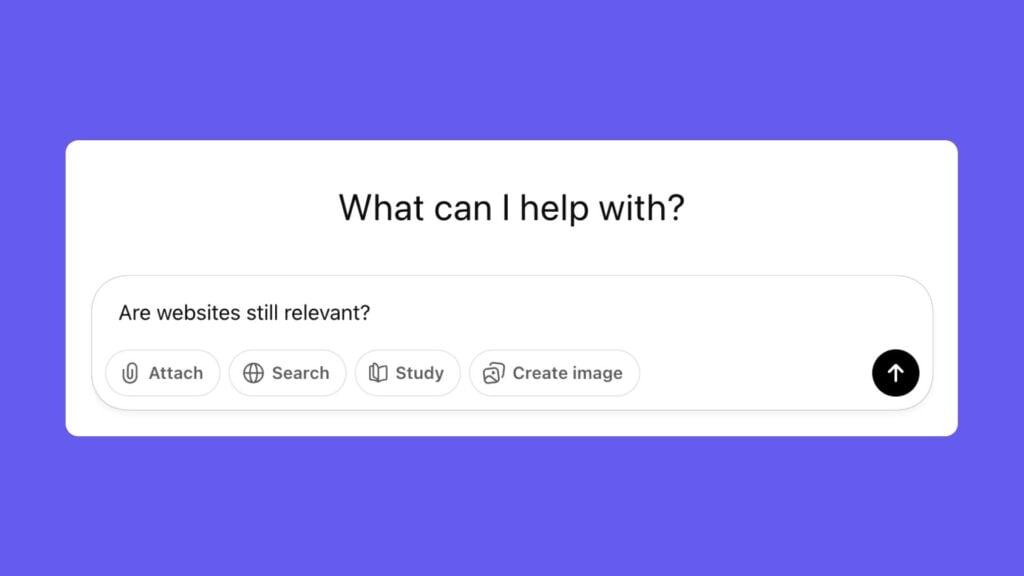
I’ve heard more than a few clients ask whether websites are becoming less important.
Ironically, I think the opposite is happening.
As more of our digital lives take place inside platforms we don’t control, the value of having one place that we do control has only increased.
Your LinkedIn profile isn’t really yours. Neither is your Instagram account, your search rankings, or the way an AI assistant chooses to describe your organization. Those experiences are increasingly shaped by algorithms, money-making priorities, and products that evolve over time.
Your website is different.
It’s the one place where you decide how your organization shows up. It’s where you fully own the medium and the message. It’s often the first place donors, partners, journalists, etc., go to verify your credibility. And increasingly, it’s where AI systems go to cite perspectives and expertise that are unmistakably yours.
In a digital landscape increasingly shaped by platforms out of your control, your website is the one place where you control the message and the context around it. There’s no interference between you and your audience. No algorithm. No forced format. No competing context. You decide what to say, how to say it, and how people experience it.
It’s your organization’s source of truth. The place your audience can cut through the B.S. and hear it straight from you.
Nobody knows exactly how AI will reshape the web. However, I think there are things we can act on now that will set you up regardless.
Five Ways to Optimize Your Website for the AI Era
1. Own your narrative. Your website should be the definitive place to understand your organization. Every important fact, program, initiative, and point of view should be clear, compelling, and easy to find.
2. Publish what only you can publish. AI is remarkably good at summarizing what’s already been said. It can’t replace unique points of view or expertise achieved through lived experience. The organizations that stand out will be the ones contributing original research, unique perspectives, and lessons learned from doing the work.
3. Optimize for understanding. Both humans and AI favor clear, easy-to-understand content. Write headlines that answer questions. Structure information logically. The easier your expertise is to understand, the more likely it is to be trusted, shared, and referenced.
4. Make trust visible. Don’t assume people will take your expertise at face value. Show it. Name your authors. Cite your research. Explain your methodology. Share outcomes whenever you can. Trust is something people feel when you’ve earned it through multiple touchpoints.
5. Treat your website like a long-term asset. Social platforms will change. Search will change. AI will change. Your website is one of the few digital assets your organization truly owns. Invest in it. Keep it current. Continue publishing. Refine it over time. The organizations that do will be well positioned no matter how people discover them.
Wrapping Up
I don’t know exactly what the internet will look like five years from now. If I had to guess, I’d say many of the experiences we know today will still exist, especially the website, but the paths people take to discover them will continue to evolve.
I suspect that organizations that invest in a clear point of view, communicate it well, and treat their website as the foundation of their digital presence will thrive in the coming years.
That makes this an exciting time to build.
If your organization is planning its next website or trying to make sense of how AI is changing the role of your website and how you can optimize it for the new era, we’d love to help. These are exactly the conversations we’re having with our clients, and we couldn’t be more excited about where they’re leading.
Feel free to contact us.