A research institute’s website has to do something unusually difficult: bring clarity to complexity while still feeling compelling, credible, and connected to the impact of the work.
The audience is wide. Scientists need access to research, data, tools, and collaborators. Funders want to understand the institute’s role in moving a field forward. Journalists need credible sources. Students and prospective hires are looking for purpose, momentum, and reputation.
It’s a category we follow closely. The best research institute websites balance science and storytelling. They translate complex work without oversimplifying it, clarify the organization’s purpose, and show how research moves from discovery to real-world impact.
Here are 10 research institute websites that do that especially well.
Translate the Science
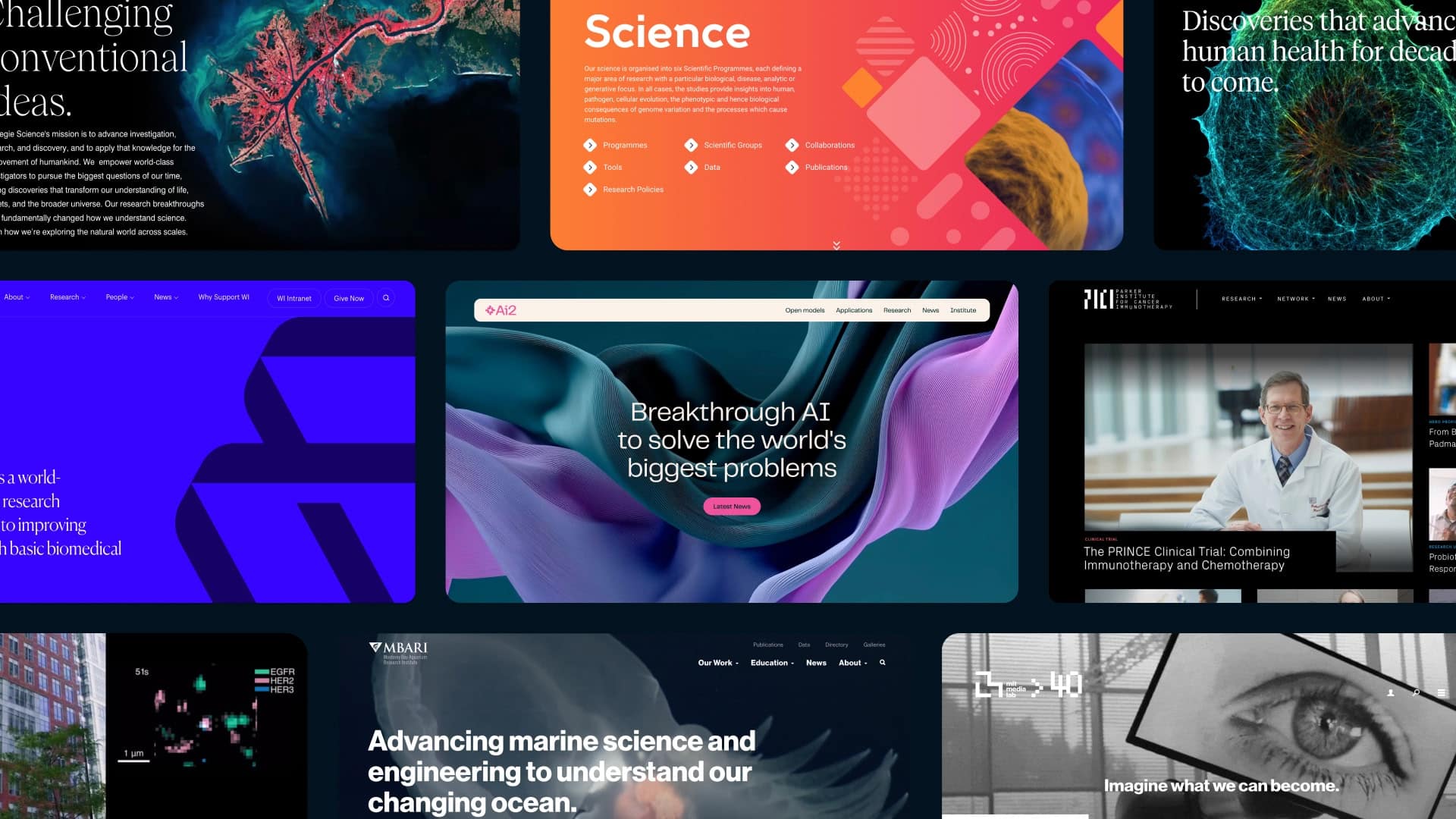
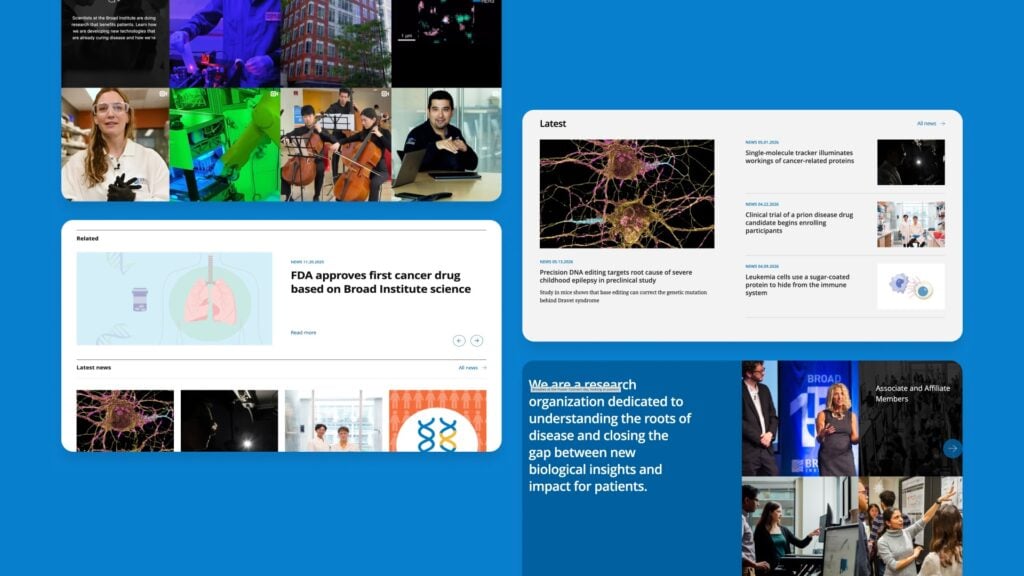
The Broad Institute’s homepage reads more like a science publication than an institutional website. New discoveries and breakthroughs are surfaced immediately, in language a non-specialist can follow. What Broad does especially well is making cutting-edge science feel immediate and active. The site gives the impression that important work is constantly moving forward.
Let the Work Introduce Itself
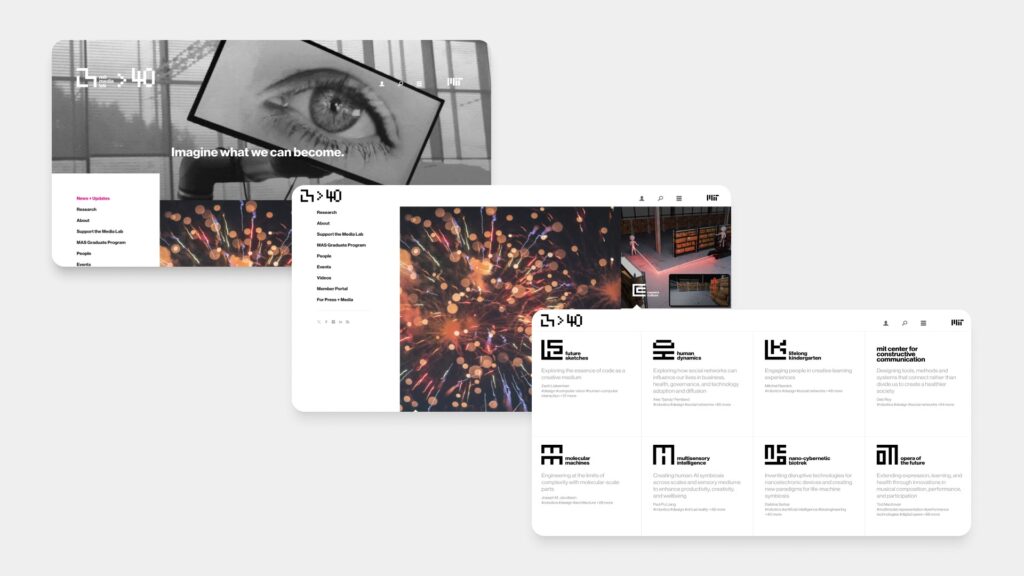
MIT’s Media Lab leads with experiments, prototypes, research, and ideas in progress. The homepage feels alive because it is constantly evolving alongside the work. Rather than spending time explaining what the organization is, the site lets visitors infer it through the output. That approach fits the institution perfectly. The Media Lab has always been about exploration and possibility, and the website reflects that energy.
Visualize the Science
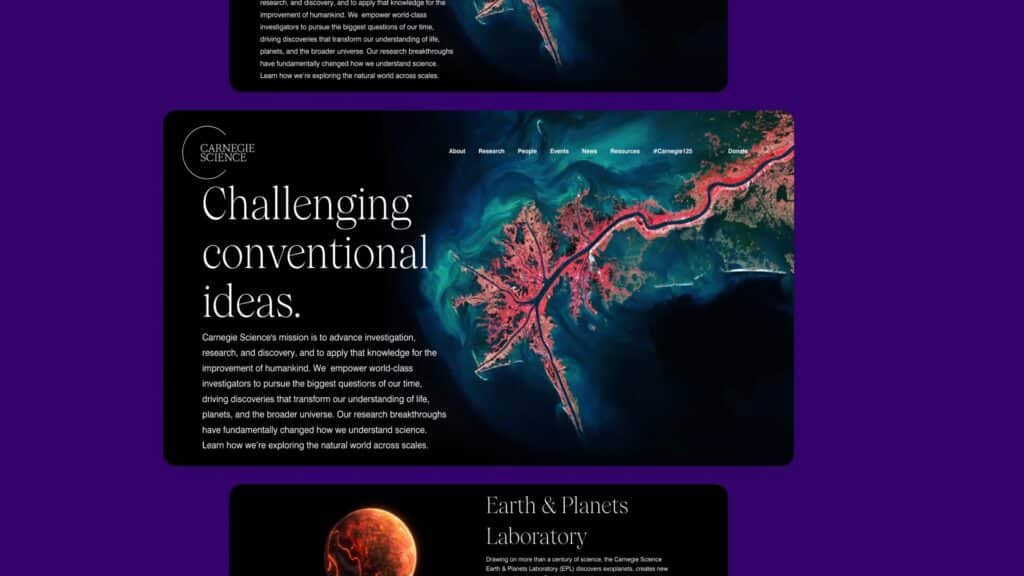
Carnegie Science works across astronomy, planetary science, plant biology, ecology, and more. The challenge with a broad research portfolio like that is making it feel coherent without flattening the differences between disciplines. The site handles that beautifully through visual storytelling. Motion, photography, and interactive elements pull visitors into each field on its own terms while still feeling part of a larger institutional identity.
Look the Part
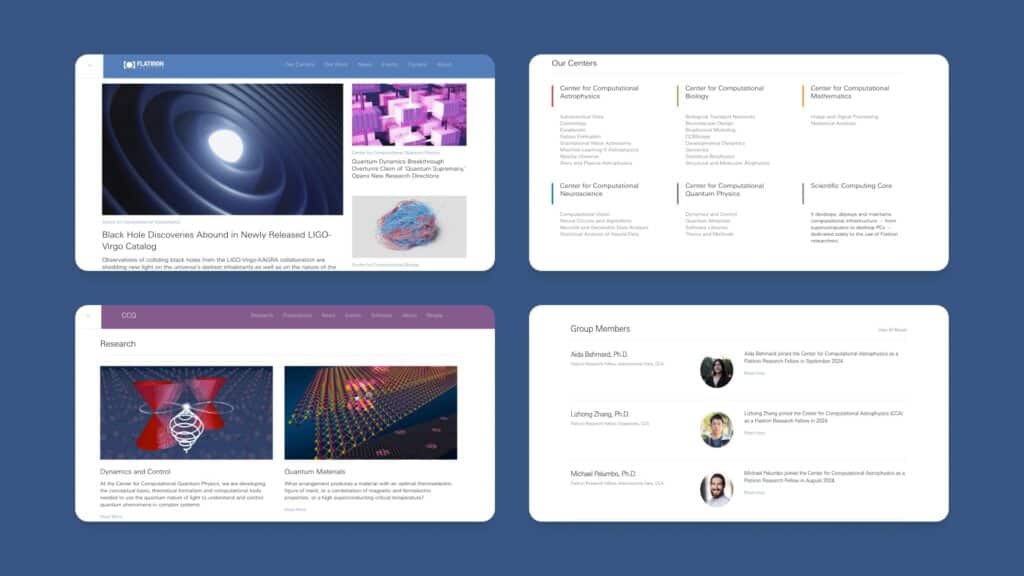
Flatiron Institute’s website is restrained in a way that feels intentional. Clean typography, careful spacing, strong hierarchy, and no unnecessary decoration. It looks academic, rigorous, and deeply focused. Like all organizations, research institutions signal credibility visually, at a glance. Flatiron understands the role design plays in conveying seriousness.
Trust the Audience
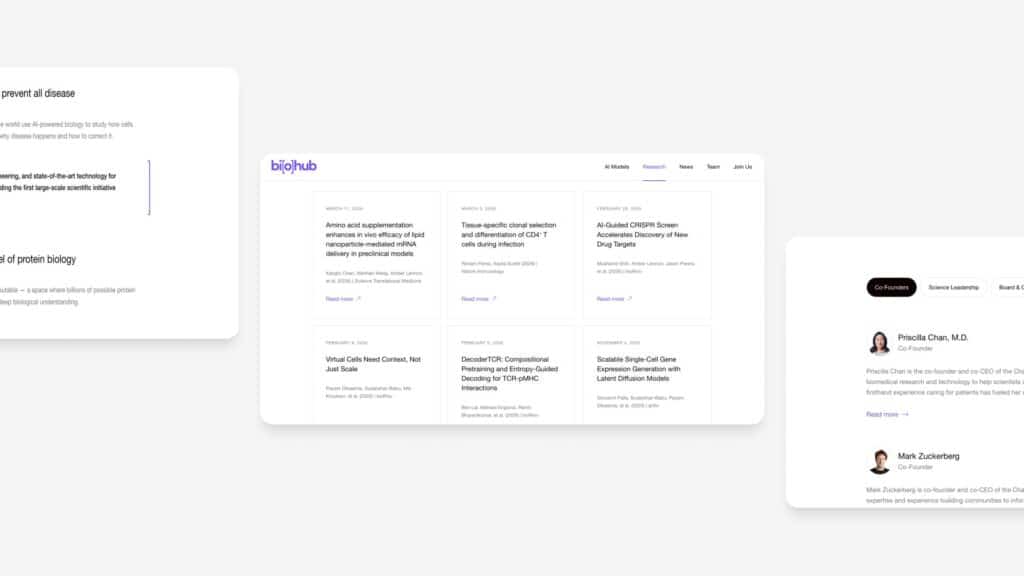
The Biohub research pages are remarkably minimal. No oversized messaging, no heavy-handed storytelling. Just publications, citations, authors, and research. That restraint works because the audience largely knows what they’re looking for. The site respects the intelligence of the field while remaining accessible to outsiders seeking to understand the work.
Show the Collaboration
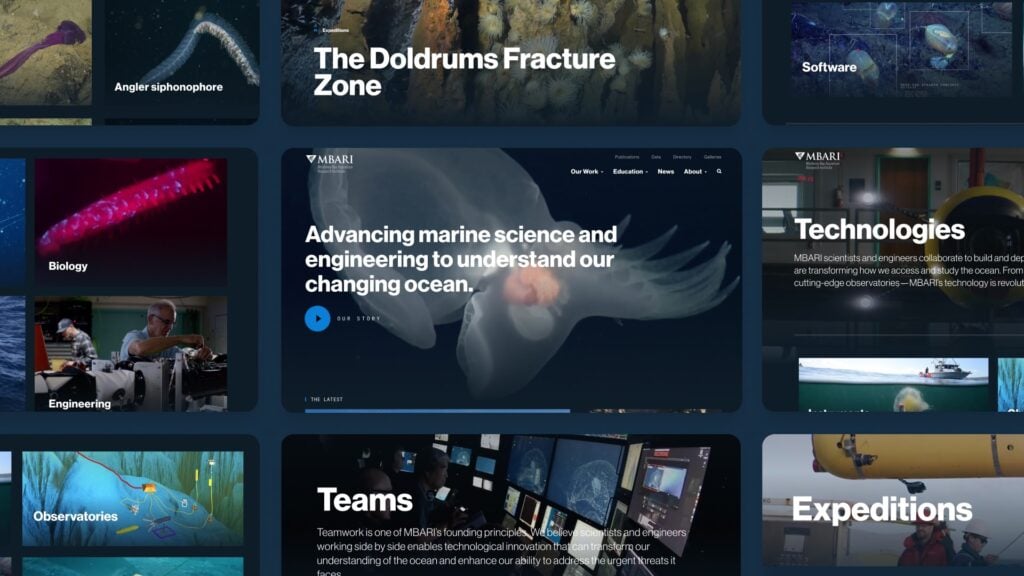
MBARI’s website does an exceptional job showing how modern science actually happens: collaboratively. Engineers, scientists, and technologists are presented as part of the same ecosystem, working together across expeditions, instruments, and research projects. The result is a website that reflects how interdisciplinary research actually works in practice.
Make the Model Tangible
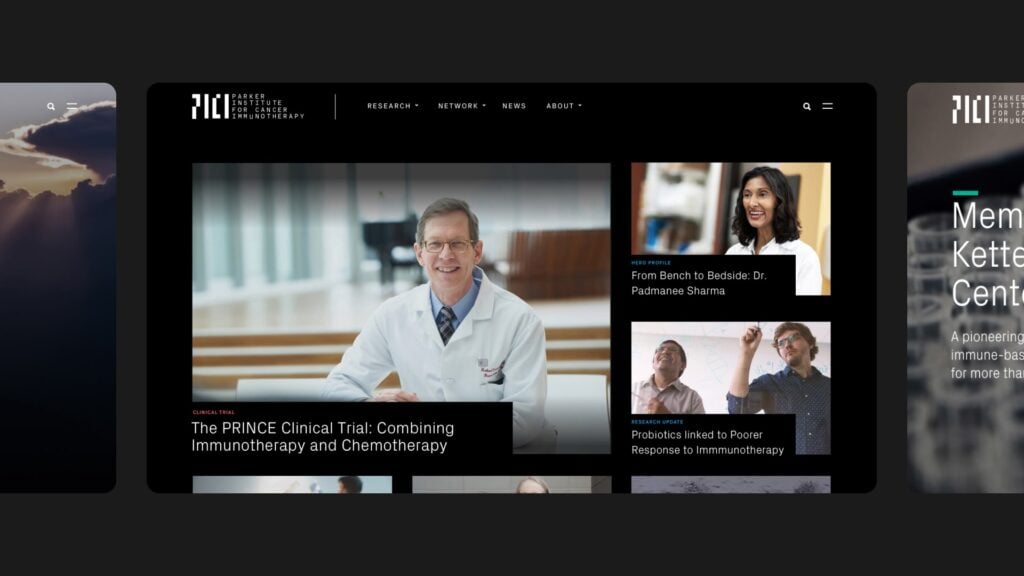
Parker Institute for Cancer Immunotherapy (PICI) is not organized around a single campus or laboratory. It’s a coordinated network of researchers, institutions, and strategic partners working together to accelerate cancer immunotherapy research and treatments. The website makes that network model tangible by clearly connecting institutions, researchers, partnerships, and emerging therapies into a cohesive story.
Look Like the Cutting Edge
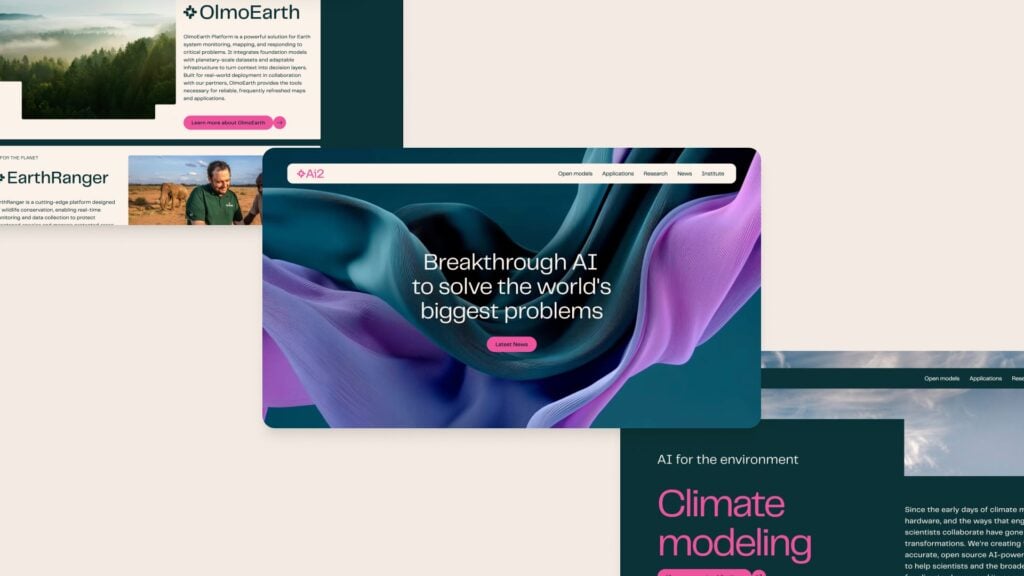
The Allen Institute for Artificial Intelligence (Ai2) website feels contemporary in the best way. Bold typography, motion, and confident layouts reinforce the sense that this is an organization actively shaping the future of AI research.
Treat the Data as the Story
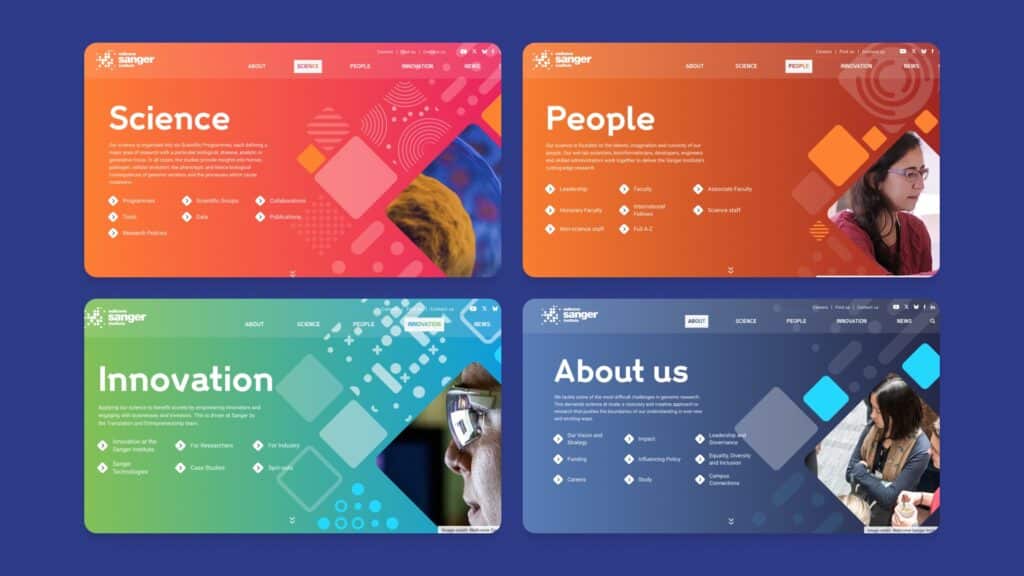
The Sanger Institute treats datasets, tools, and scientific resources as core content rather than secondary support material. Collaboration pathways, genomic resources, and software are integrated directly into the experience alongside institutional storytelling. That balance is difficult to achieve.
Give Science a Voice
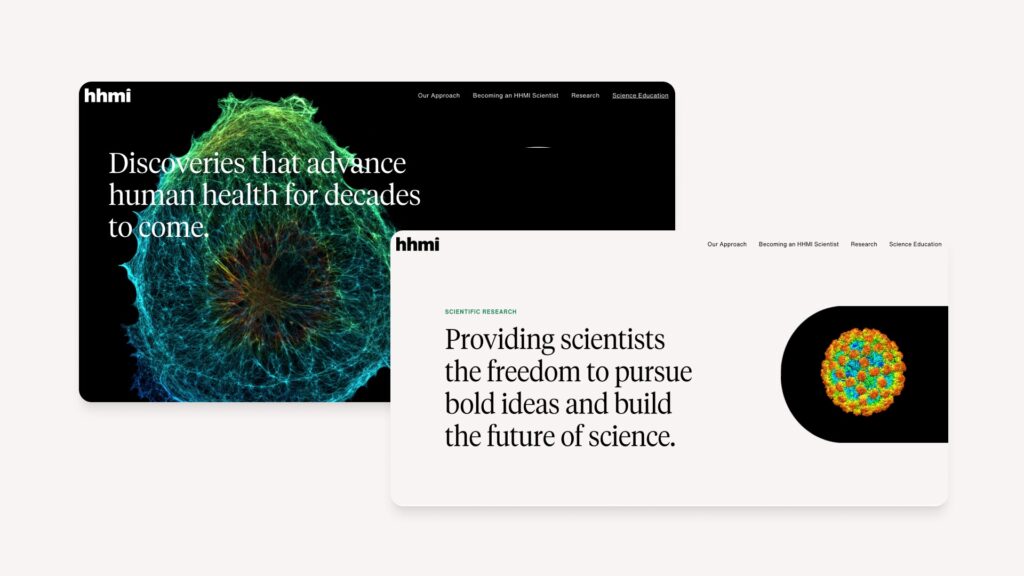
HHMI understands that scientific reputation is deeply human. The site invests heavily in stories, interviews, videos, and editorial content centered on researchers themselves. That approach gives the organization warmth and personality while reinforcing credibility. You leave with a better understanding of not just the science, but the people advancing it.
Wrapping Up
World-class research deserves a world-class website. If your organization is rethinking how it shows up online, we’d love to talk.